Start here
Where to Begin
Two opening essays that state the case plainly: violence against children is easy, and the world cannot survive many more generations of affectionless adults.
Read the openingThe Canadian Society for the Prevention of Cruelty to Children
Our focus is on the long term consequences of inadequate care of very young children. Our objective is to change those things in society that make it difficult for parents to give their children the care they need to grow into compassionate, empathic and trusting adults.
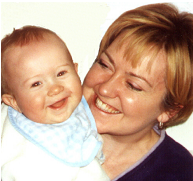
What we mean
The Society was formed around a simple and demanding standard of care, set out in its founding credo.
Being willing and able to put yourself in your child's shoes in order to correctly identify his or her feelings, and
being willing and able to behave toward your child in ways which take those feelings into account.
Empathic parenting takes an enormous amount of time and energy and fully involves both parents in a cooperative, sharing way.
Empathic Parenting is also the name of the quarterly print journal published by the CSPCC from 1978 to 2003.
Recognizing that the capacity to give and receive trust, affection and empathy is fundamental to being human, and knowing that all of us suffer the consequences when children are raised in a way that makes them affectionless and violent, and realizing that for the first time in history we have definite knowledge that these qualities are determined by the way the child is cared for in the very early years.
Read the full credoThe reading room
The Society's writing moves from the earliest bonds between parent and child, through the social forces that press on families, to a picture of a more affectionate society.
Start here
Two opening essays that state the case plainly: violence against children is easy, and the world cannot survive many more generations of affectionless adults.
Read the openingFirst movement
Trauma, attachment and the ways that early care echoes through a life.
Enter the sectionSecond movement
The inner and inherited patterns that carry unempathic care from one generation to the next.
Enter the sectionThird movement
Consumerism, work and the public pressures that shape family life.
Enter the sectionFourth movement
Changes in economics, home life and equality that could make empathic care easier to provide.
Enter the sectionFifth movement
A picture of the society that would value children, affection and trust.
Enter the sectionEssay
Burton White on why two children under three place a family in a chronically difficult state, and why parents need not pretend otherwise.
Read the essayArchive film
A 30 minute film from the Society's archive, preserved as a downloadable file.
Visit the film pageThe full run of the Empathic Parenting journal, published between 1978 and 2003, is preserved as a free archive for parents, students and researchers.